Dashavatar Explained: Ancient Evolution, Modern Science & the Deeper Truth Behind Vishnu’s Ten Incarnations
For centuries, Dashavatar has been narrated as a series of divine stories—ten incarnations of Lord Vishnu appearing across different ages. But when observed closely, Dashavatar reveals something far more profound than mythology. It presents a structured explanation of evolution, consciousness, ethics, and human responsibility, thousands of years before modern science attempted to decode similar patterns.
This blog is written to bring clarity, not confusion. To answer doubts, not mystify. And to help you understand why Dashavatar is not a belief system—but a framework of reality, deeply relevant to modern life.
At Krutik, this understanding has been transformed into a Dashavatar painting set of two artworks, designed not just to decorate walls, but to anchor homes in meaning, intelligence, and awareness.
What Is Dashavatar, Really?
Dashavatar refers to the ten avatars (incarnations) of Lord Vishnu, the preserver of the universe in Hindu philosophy. Vishnu does not create the world, nor does he destroy it—his role is to maintain balance (dharma).
Whenever imbalance grows—socially, morally, environmentally, or psychologically—Vishnu adapts to the situation and appears in a form that can restore equilibrium.
This is the first key idea most people miss:
Vishnu does not reincarnate emotionally. He incarnates strategically.
Each avatar is not random. Each form is specific, necessary, and context-driven.

Dashavatar Is a Theory of Evolution—But Not Just Biological
Modern education teaches us evolution through biology—primarily via Charles Darwin, who explained how life evolved from aquatic organisms to complex human beings.
What Darwin explained physically, Dashavatar explains holistically.
Dashavatar maps:
-
Physical evolution of life
-
Psychological evolution of humans
-
Moral evolution of society
-
Spiritual evolution of consciousness
In simple terms:
-
Science explains how bodies evolved
-
Dashavatar explains why awareness had to evolve
Why Vishnu Took These Exact Ten Forms
A common doubt people have is:
Why a fish? Why a tortoise? Why a half-lion? Why not just human forms from the beginning?
The answer lies in the condition of life at each stage of existence.
Dashavatar unfolds in a clear evolutionary order, not mythological randomness.

The First Five Avatars: Evolution of Life Itself
1. Matsya – Life Begins in Water
Matsya, the fish avatar, appears during a great cosmic flood to save sacred knowledge.
Scientific alignment:
Life originated in water.
Deeper truth:
When life is at its most fragile stage, the priority is preservation—of existence and knowledge.
Matsya represents survival consciousness.
2. Kurma – The Need for Stability
Kurma, the tortoise, supports Mount Mandara during the churning of the ocean.
Scientific alignment:
Amphibious life—creatures that could survive both water and land.
Deeper truth:
Progress cannot happen without stability. Evolution needs a foundation.
Kurma represents endurance and balance.
3. Varaha – Earth Becomes Sacred
Varaha, the boar, lifts Earth from the cosmic waters.
Scientific alignment:
Life establishes itself fully on land.
Deeper truth:
Civilization begins when Earth is protected, not exploited.
Varaha represents responsibility toward the planet.
4. Narasimha – Instinct Meets Intelligence
Half-man, half-lion—Narasimha appears when laws fail to protect justice.
Scientific alignment:
Early humans—emotionally driven, instinct-heavy, intelligent but volatile.
Deeper truth:
Intelligence without compassion becomes destructive.
Narasimha represents controlled power.
5. Vamana – Awakening of Moral Intelligence
Vamana, the dwarf, reshapes the universe through humility, not force.
Scientific alignment:
Cognitive development in humans—language, ethics, reasoning.
Deeper truth:
True power lies in awareness, not size or dominance.
Vamana represents ethical intelligence.
A Crucial Shift: From Evolution of Body to Evolution of Mind
After Vamana, all avatars are fully human.
This is not coincidence.
It signals that biological evolution is complete. What remains is inner evolution—how humans use power, intelligence, and freedom.

The Last Five Avatars: Evolution of Consciousness
6. Parashurama – Power Without Wisdom
Parashurama is a warrior who eventually renounces violence.
Modern relevance:
Human history filled with wars, domination, and conquest.
Core message:
Power without restraint destroys itself.
7. Rama – The Ideal Human System
Rama is disciplined, ethical, emotionally controlled—not superhuman.
Modern relevance:
Law, governance, social order.
Core message:
Society survives on values, not strength.
8. Krishna – Complexity of Truth
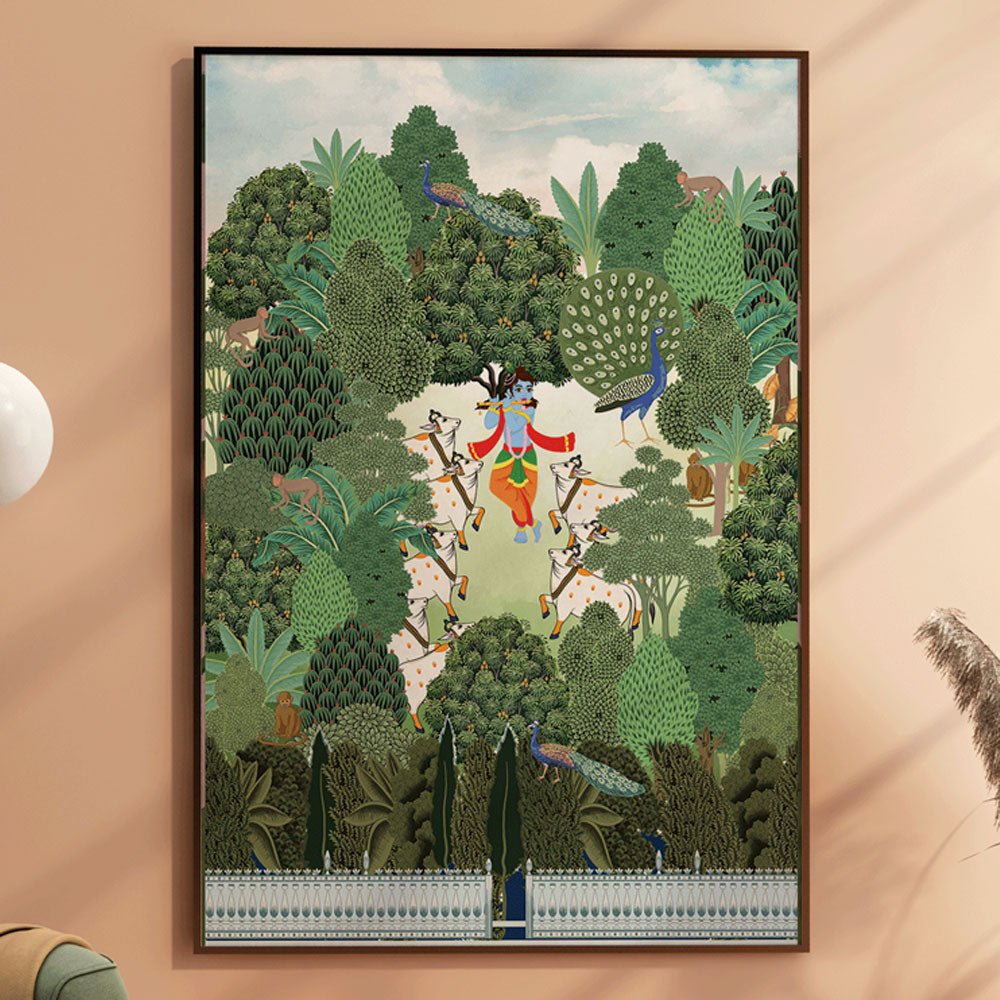
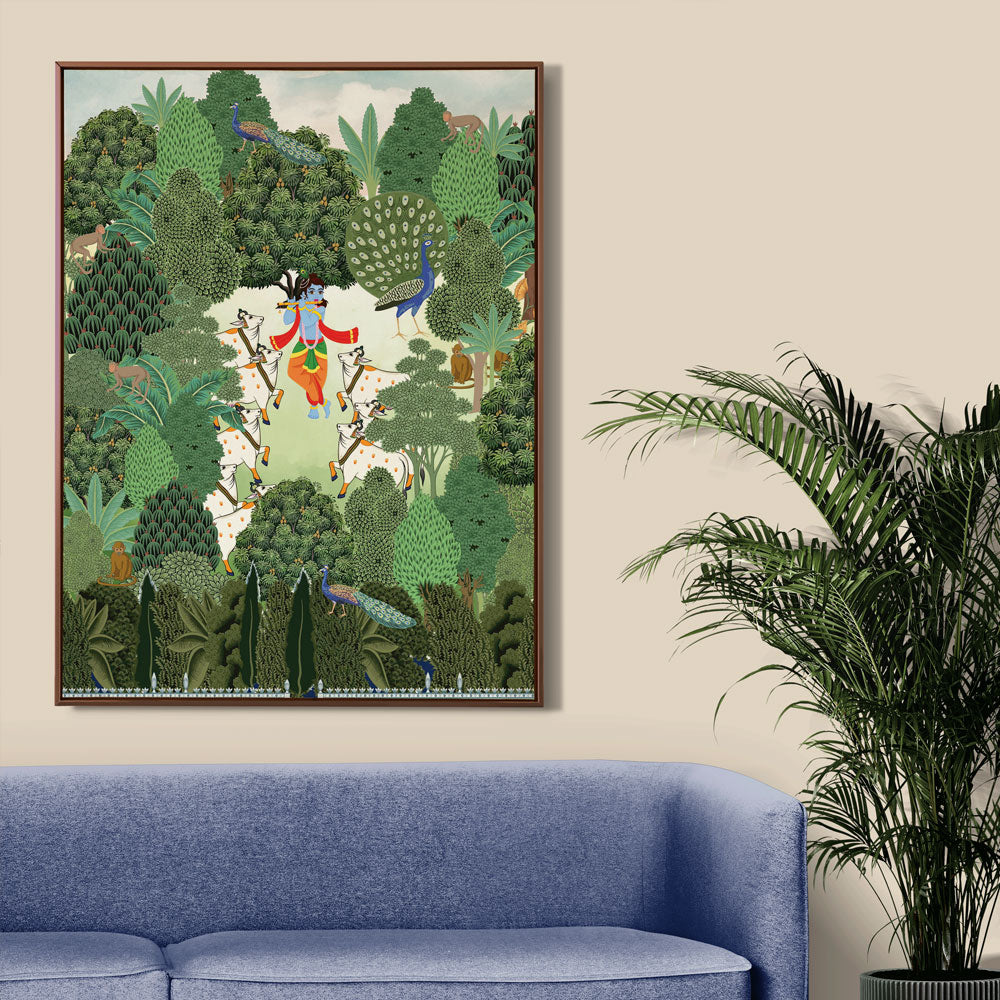
Krishna introduces strategy, love, devotion, and cosmic wisdom.
Modern relevance:
Life is not black-and-white. Ethics are contextual.
Core message:
Wisdom requires flexibility, not rigidity.
9. Buddha – Inner Awakening
Buddha turns attention inward—toward suffering, desire, and liberation.
Modern relevance:
Psychology, mindfulness, mental health.
Core message:
The real battlefield is within.
10. Kalki – The Inevitable Reset
Kalki is yet to appear.
Modern relevance:
Environmental crisis, moral decay, imbalance driven by greed and speed.
Core message:
When consciousness collapses, renewal becomes inevitable.

Why Dashavatar Is Not “Just Stories”
Ancient Indian texts were not written for entertainment. They were:
-
Observations of nature
-
Records of human psychology
-
Studies of societal cycles
-
Insights gained through meditation and awareness
That is why Dashavatar aligns with:
-
Biology
-
Psychology
-
Sociology
-
Ethics
-
Environmental balance
Even today.
Dashavatar in Modern Life: Why It Matters Now More Than Ever
Dashavatar teaches us:
-
Growth without ethics is dangerous
-
Intelligence without empathy leads to destruction
-
Progress without balance creates collapse
-
Evolution without consciousness is incomplete
In a world driven by speed, technology, and consumption, Dashavatar asks a simple but powerful question:
Are we evolving outwardly, but regressing inwardly?
Krutik’s Dashavatar Painting: Where Philosophy Meets Art
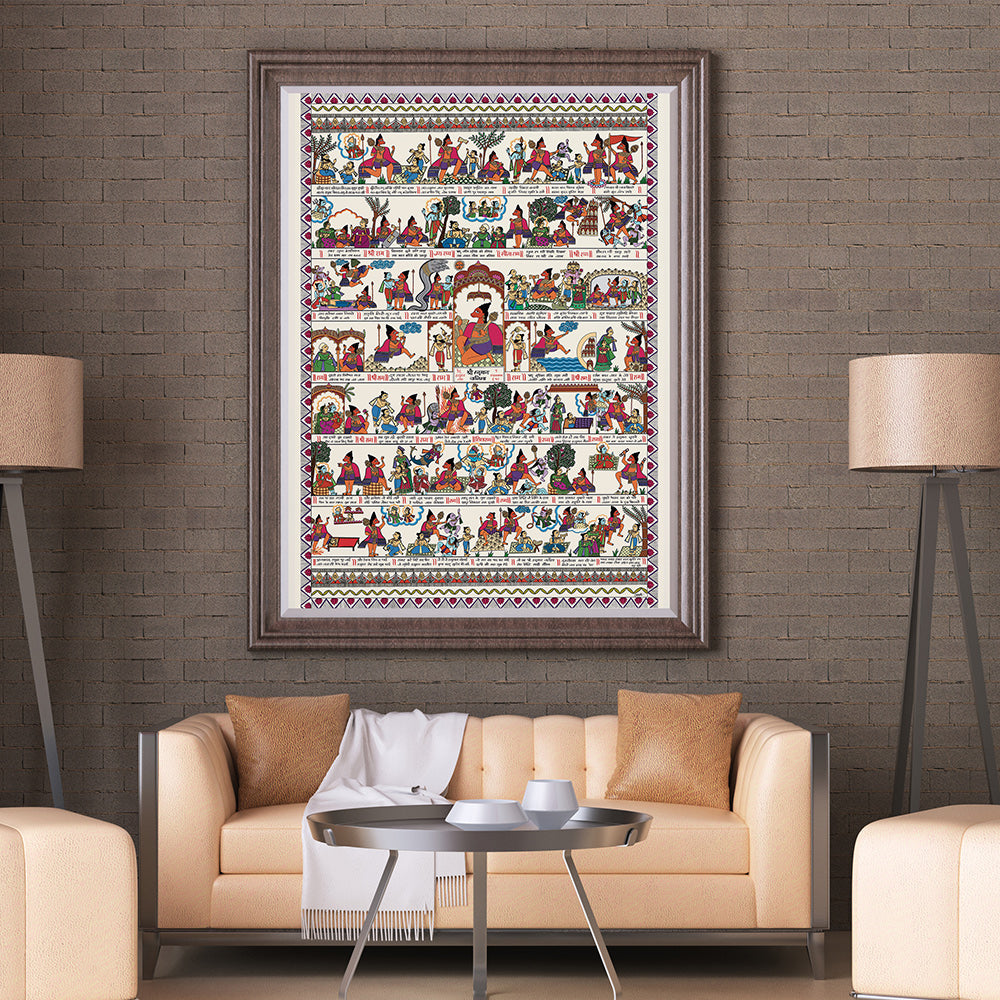
At Krutik, Dashavatar is presented as a set of two thoughtfully curated paintings, designed to respect the natural progression of evolution.
-
Painting One: Matsya to Vamana
(Birth of life, survival, stability, strength, moral intelligence) -
Painting Two: Parashurama to Kalki
(Conflict, discipline, wisdom, awakening, renewal)
This two-part format allows the story to unfold gradually and meaningfully, just as evolution itself did.
These are not decorative prints.
They are intentional artworks—created for homes that value awareness, for individuals who seek clarity, and for spaces that reflect depth.
Why Krutik’s Dashavatar Painting Is Relevant Today
-
Ideal for spiritual homes and meditation spaces
-
Aligns with Vastu and conscious living
-
Appeals to seekers of knowledge, not blind belief
-
Bridges ancient wisdom with modern understanding
-
Encourages reflection, balance, and growth
Final Thought
Dashavatar is not about gods descending from the sky.
It is about humanity rising in awareness.
And Krutik’s Dashavatar painting set is a reminder—on your wall, every day—that evolution is not finished yet.
Not in the world.
Not in society.
And not within us.
Looking to bring Dashavatar into your space?
Krutik’s Dashavatar painting set transforms ancient truth into timeless art—crafted for modern homes that believe evolution is not just scientific, but spiritual.